
Facilities
Advanced Facilities for Quality Production Work
We are proud to work with leading brands across automotive and engineering sectors. Our focus on quality, timely delivery and strong support helps us build long-term trust and reliable partnerships.*
Feasibility Study
GLORIA GROUP do feasibility study to complete a project successfully, taking into account legal, economic, technological, scheduling and other factors. Rather than just diving into a project and hoping for the best, a feasibility study allows project managers to investigate the possible negative and positive outcomes of a project before investing too much time and money. We at GLORIA take following elements into consideration while doing feasibility study.
1. The Project Scope which is used to define the business problem and/or opportunity to be addressed. The old adage, "The problem well stated is half solved," is very apropos. The scope should be definitive and to the point; rambling narrative serves no purpose and can actually confuse project participants. It is also necessary to define the parts of the business affected either directly or indirectly, including project participants and end-user areas affected by the project. The project sponsor should be identified, particularly if he/she is footing the bill. I have seen too many projects in the corporate world started without a well defined project scope. Consequently, projects have wandered in and out of their boundaries causing them to produce either far too much or far too little than what is truly needed.
2. The Current Analysis is used to define and understand the current method of implementation, such as a system, a product, etc. From this analysis, it is not uncommon to discover there is actually nothing wrong with the current system or product other than some misunderstandings regarding it or perhaps it needs some simple modifications as opposed to a major overhaul. Also, the strengths and weaknesses of the current approach are identified (pros and cons). In addition, there may very well be elements of the current system or product that may be used in its successor thus saving time and money later on. Without such analysis, this may never be discovered. Analysts are cautioned to avoid the temptation to stop and correct any problems encountered in the current system at this time. Simply document your findings instead, otherwise you will spend more time unnecessarily in this stage (aka "Analysis Paralysis").
3. Requirements and how requirements are defined depends on the object of the project's attention. For example, how requirements are specified for a product are substantially different than requirements for an edifice, a bridge, or an information system. Each exhibits totally different properties and, as such, are defined differently. How you define requirements for software is also substantially different than how you define them for systems.
4. The Approach represents the recommended solution or course of action to satisfy the requirements. Here, various alternatives are considered along with an explanation as to why the preferred solution was selected. In terms of design related projects, it is here where whole rough designs (e.g., "renderings") are developed in order to determine viability. It is also at this point where the use of existing structures and commercial alternatives are considered (e.g., "build versus buy" decisions). The overriding considerations though are: * Does the recommended approach satisfy the requirements? * Is it also a practical and viable solution? (Will it "Play in Poughkeepsie ?") A thorough analysis here is needed in order to perform the next step
5. Evaluation examines the cost effectiveness of the approach selected. This begins with an analysis of the estimated total cost of the project. In addition to the recommended solution, other alternatives are estimated in order to offer an economic comparison. For development projects, an estimate of labour and out-of-pocket expenses is assembled along with a project schedule showing the project path and start-and-end dates. After the total cost of the project has been calculated, a cost and evaluation summary is prepared which includes such things as a cost/benefit analysis, return on investment, etc.
6. Review that all of the preceding elements are then assembled into a Feasibility Study and a formal review is conducted with all parties involved. The review serves two purposes: to substantiate the thoroughness and accuracy of the Feasibility Study, and to make a project decision; either approve it, reject it, or ask that it be revised before making a final decision. If approved, it is very important that all parties sign the document which expresses their acceptance and commitment to it; it may be a seemingly small gesture, but signatures carry a lot of weight later on as the project progresses. If the Feasibility Study is rejected, the reasons for its rejection should be explained and attached to the document.
Research & Development (R & D)
Research and development (R&D) in GLORIA GROUP consists of investigative activities that a business chooses to conduct with the intention of making a discovery that can either lead to the development of new products or procedures, or to improvement of existing products or procedures. Research and development is one of the means by which business can experience future growth by developing new products or processes to improve and expand their operations
Research and development (R&D) aims to create new technology or information that can improve the effectiveness of products or make the production of products more efficient. Lots of time, energy, and investment is laid by our R & D team, which consists of feasibility study of customer drawings, investing in tools and fixture for development of prototype. After approval of prototype from customer end, this comes in to production stage.
Why it Matters: IT is more important to some companies than to others. For example, a computer software company would spend much more on R&D than a retail sales company would. Technology companies survive by developing more effective technology than their competitors. A company like Apple has many employees that work in R&D because Apple competes in its market by first developing and then releasing devices that are better and more appealing than ones created by competitors.
Production Planning Control
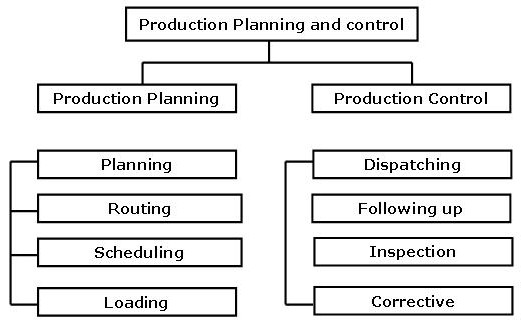
PRODUCTION PLANNING AND CONTROL consists of three words: These three words for GLORIA GROUP means:
PRODUCTION: means converting raw material into finished goods. PLANNING: Production planning is done according to the customer requirement, while planning one should anticipate possible difficulties and hence planning should be carried out smoothly . CONTROL: this defines control the production as planned.
Quality Control
Why quality control is necessary for every organization? Deming has explained this in very simple way i.e
- IMPROVE QUALITY
- DECREASE COSTS
- IMPROVE PRODUCTIVITY
- DECREASE PRICE
- INCREASE MARKET
- STAY IN BUSINESS
- PROVIDE MORE JOBS
- RETURN ON INVESTMENT.
To Improve Quality Gloria Group Consider Following Tools:
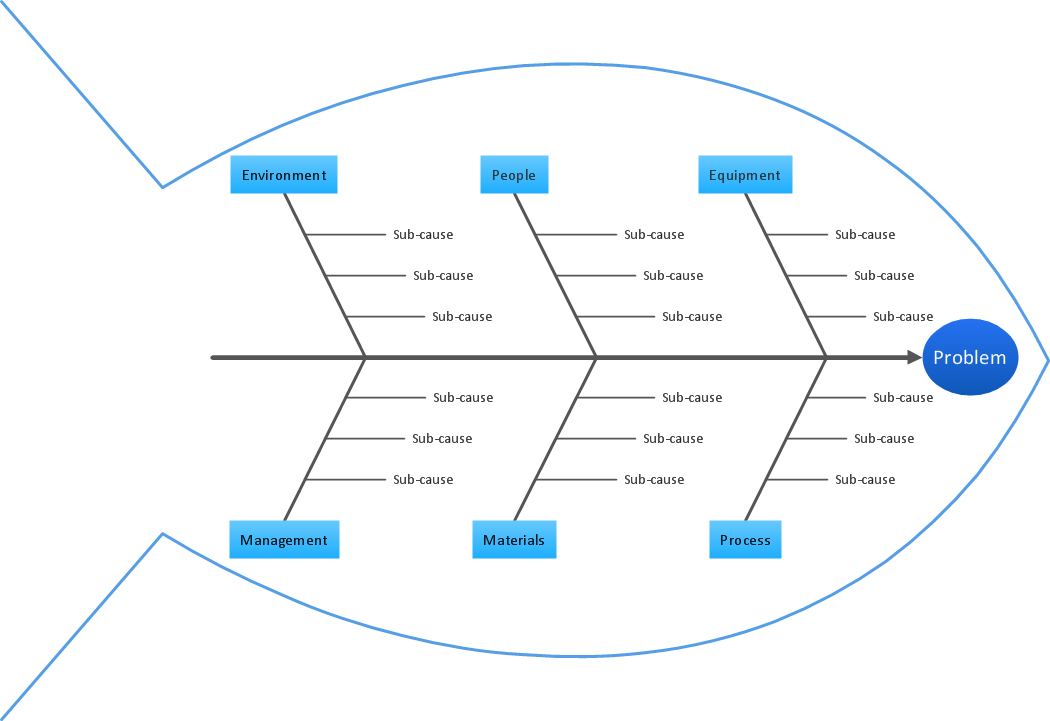
1. Cause and Effect Diagram
Purpose: Graphical representation of the trail leading to the root cause of a problem
How is it done?- Decide which quality characteristic, outcome or effect you want to examine (may use Pareto chart)
- Backbone - draw straight line
- Ribs - categories
- Medium size bones - secondary causes
- Small bones - root causes
2.Flow Charts
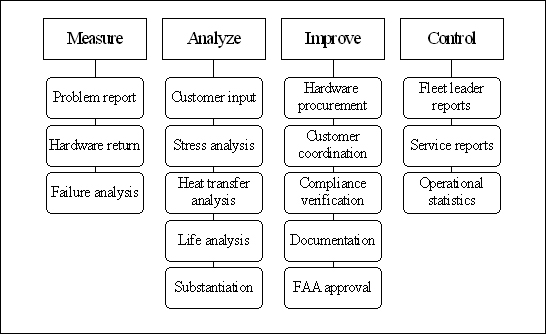
Purpose: Visual illustration of the sequence of operations required to complete a task
- Schematic drawing of the process to measure or improve.
- Starting point for process improvement
- Potential weakness in the process are made visual.
- Picture of process as it should be.
- Identify process improvements
- Understand the process
- Shows duplicated effort and other non-value-added steps
- Clarify working relationships between people and organizations
- Target specific steps in the process for improvement.
3.Checksheets
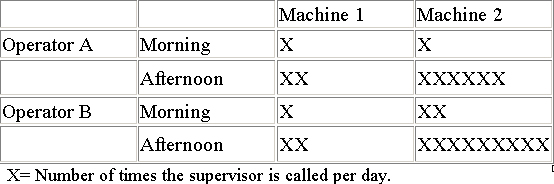
Purpose:
- Tool for collecting and organizing measured or counted data
- Data collected can be used as input data for other quality tools
- Collect data in a systematic and organized manner
- To determine source of problem
- To facilitate classification of data (stratification)
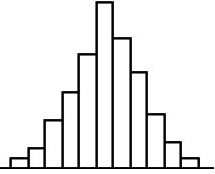
4.Histogram
Purpose: To determine the spread or variation of a set of data points in a graphical form
How is it done?- Collect data, 50-100 data point
- Determine the range of the data
- Calculate the size of the class interval
- Divide data points into classes Determine the class boundary
- Count # of data points in each class
- Draw the histogram
Benefits:
- Allows you to understand at a glance the variation that exists in a process
- The shape of the histogram will show process behavior
- Often, it will tell you to dig deeper for otherwise unseen causes of variation.
- The shape and size of the dispersion will help identify otherwise hidden sources of variation
- Used to determine the capability of a process
- Starting point for the improvement process
5. Pareto Charts
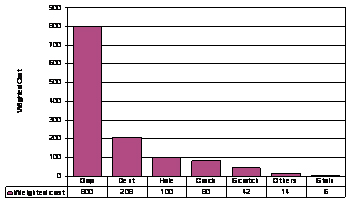
Purpose: Prioritize problems.
How is it done?- Create a preliminary list of problem classifications.
- Tally the occurrences in each problem classification.
- Arrange each classification in order from highest to lowest
- Construct the bar chart
6. Control Charts
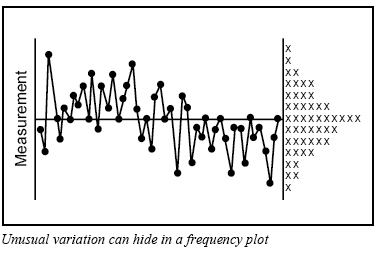
Purpose: The primary purpose of a control chart is to predict expected product outcome.
Benefits- Predict process out of control and out of specification limits.
- Distinguish between specific, identifiable causes of variation
- Can be used for statistical process control
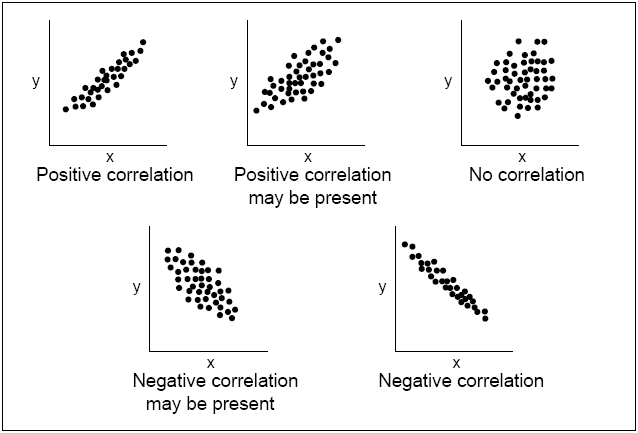
7. Scatter Diagram
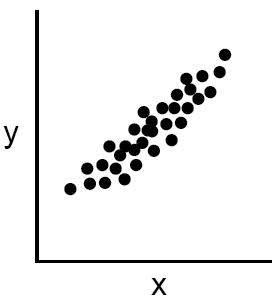
Purpose: To identify the correlations that might exist between a quality characteristic and a factor that might be driving it
Benefits- A scatter diagram shows the correlation between two variables in a process.
- These variables could be a Critical To Quality (CTQ) characteristic and a factor affecting it two factors affecting a CTQ or two related quality characteristics.
- Dots representing data points are scattered on the diagram.
- The extent to which the dots cluster together in a line across the diagram shows the strength with which the two factors are related.
Packaging & Dispatch
After the production stage, the final product comes into existence and is ready for dispatch after inspection is done by quality team.
When the product comes out it is either packed in bubble packing or it is hanged on the rack in proper aligned manner.
After packing the products is dispatched to desired destination.
Advantages Of Packing:- No physical contact
- Quality maintained
- Less rejection
- More productivity
- Reduce cost


